
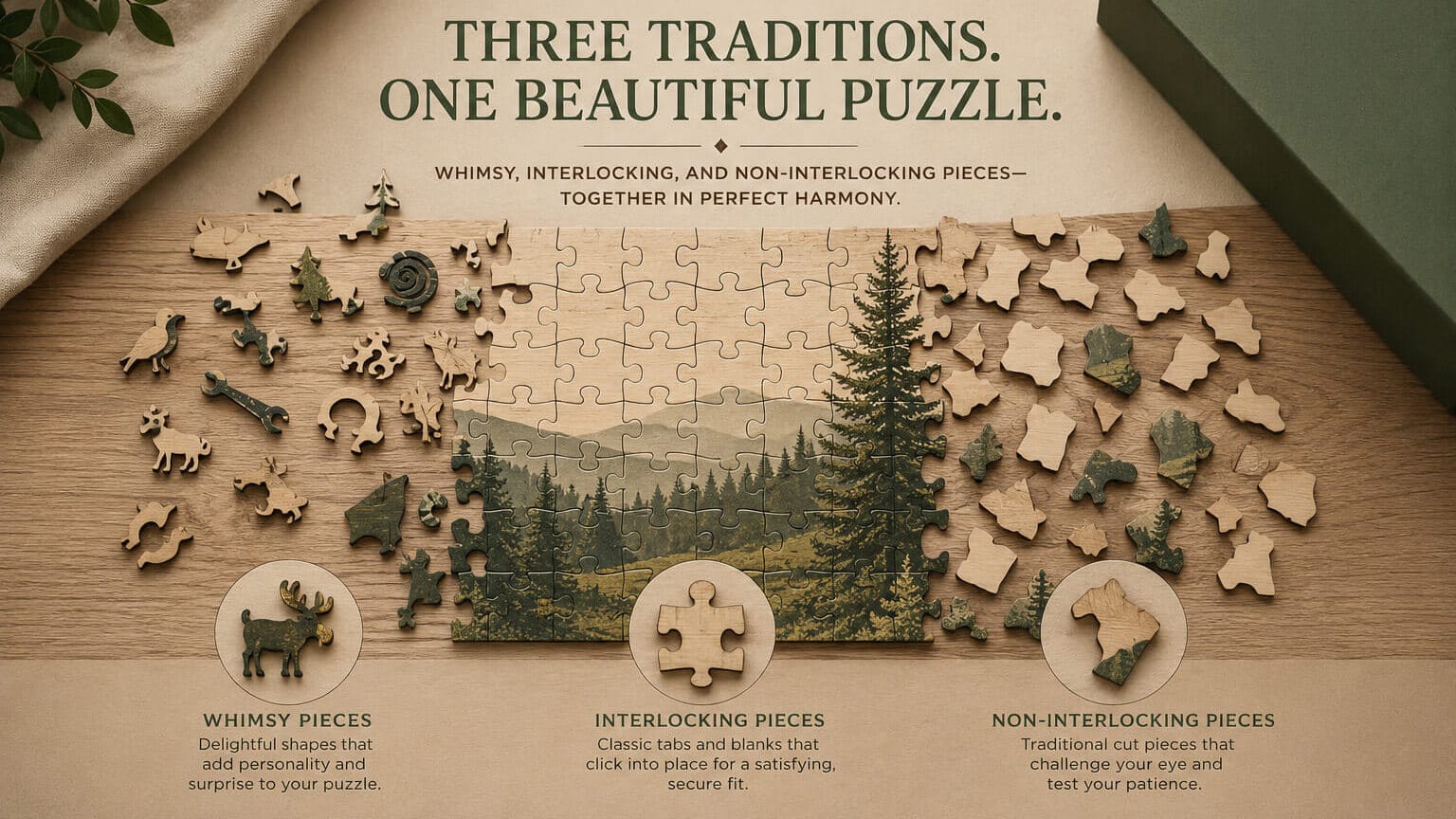
At Evergreen Puzzles, we bring together the best of every puzzling tradition in one beautifully crafted wooden experience. Our puzzles feature a thoughtful blend of whimsy, interlocking, and non-interlocking pieces so that you’re not just solving a puzzle, you’re discovering it. From delightfully shaped whimsy pieces that add personality and surprise, to satisfying interlocking sections that click into place, to more freeform pieces that challenge your eye and patience, every puzzle offers a dynamic and engaging journey. It’s this combination that makes Evergreen puzzles truly unique: a handcrafted feel with layered complexity, designed for puzzlers who want more than just the ordinary.
Whimsy Pieces
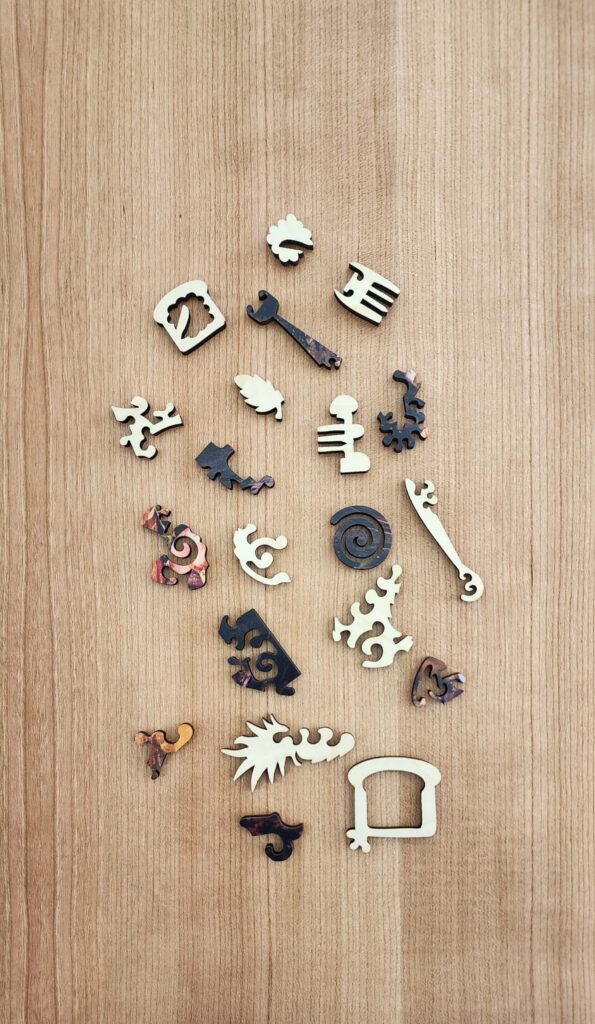
Whimsy pieces have their roots in the early days of wooden jigsaw puzzles, when they were hand-cut in the late 1800’s and early 1900’s. Back then, puzzle makers weren’t limited to standard shapes, so they’d occasionally get a little creative and cut pieces into recognizable figures like animals, people, or everyday objects.
These special shapes became known as “whimsies” because they were added on a whim, giving each puzzle a bit of personality and surprise. Today, whimsy pieces carry on that tradition by turning puzzling into a mini treasure hunt where every unique shape you discover feels like a small reward.
Interlocking Pieces
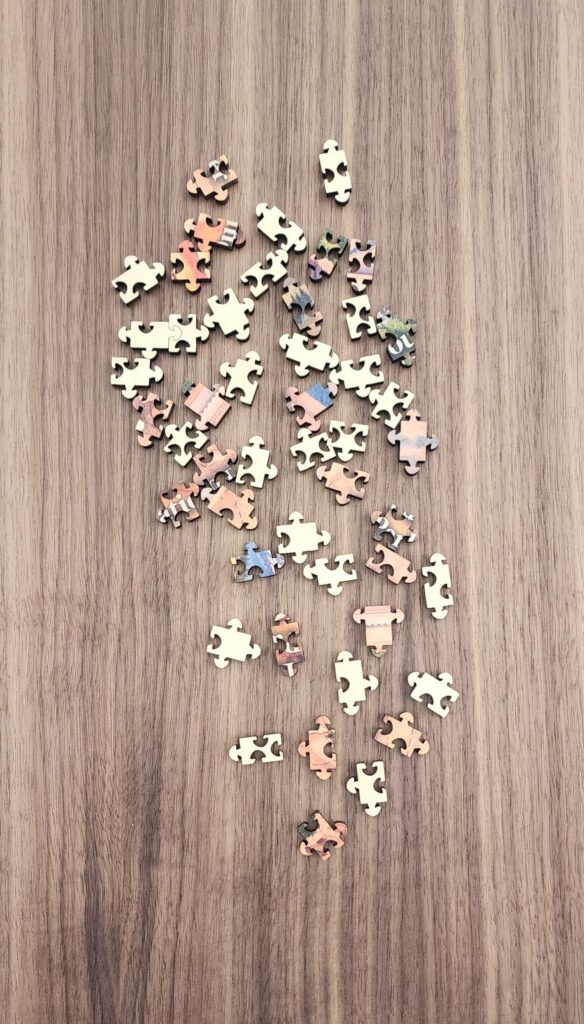
Standard interlocking puzzle pieces, the familiar shapes with tabs and blanks that fit snugly together, became popular as puzzle manufacturing shifted from hand-cut wooden designs to mass-produced cardboard puzzles in the early 20th century.
This evolution helped transform jigsaw puzzles into a widespread recreational activity, especially during the 1930’s when they surged in popularity. Today, interlocking pieces remain the standard because they provide a satisfying, secure fit, giving puzzlers that classic “click” feeling while helping keep sections together as the image comes to life.
Non-Interlocking Pieces
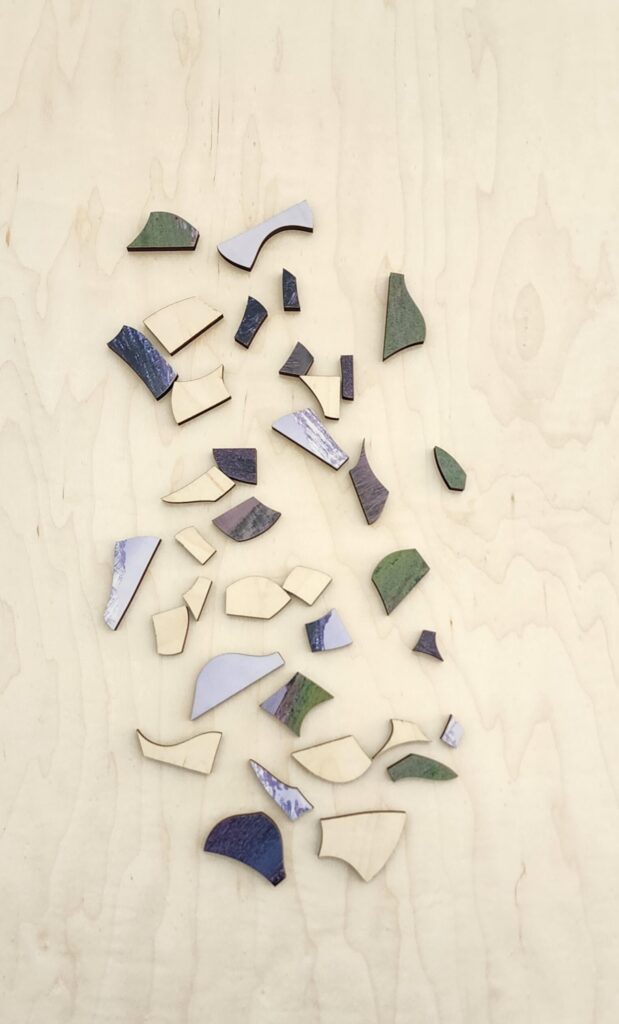
Non-interlocking puzzle pieces harken back to the earliest days of jigsaw puzzles, before the now-familiar tabs and blanks became standard. These pieces are cut without locking connectors, meaning they simply sit next to one another rather than snapping together.
This style was common in early hand-cut wooden puzzles, where craftsmanship and the image itself guided assembly rather than piece shape. Today, non-interlocking puzzles offer a more traditional and often more challenging experience, requiring careful placement and a sharper eye, since pieces can be moved or bumped more easily.
References
Wikipedia contributors. (n.d.). Jigsaw puzzle. In Wikipedia, The Free Encyclopedia. Retrieved March 26, 2026, from https://en.wikipedia.org/wiki/Jigsaw_puzzle
-
The History of Puzzling: From Ancient Maps to Modern Wooden Puzzles
For centuries, puzzles have brought people together through curiosity, creativity, and the simple joy of…
-

Give Dad More Than a Gift This Father’s Day
Father’s Day gifts are often easy to forget, another tie, another mug, another last-minute purchase.…
-

Evergreen Puzzles: There’s A Style For Everyone
At evergreen puzzles, we’ve decided to create three different styles for folks to test their…

Leave a Reply